
7 min read

Pharmaceutical Packaging Artwork: Closing Compliance Gaps

Pharmaceutical Packaging Artwork: Closing Compliance Gaps

Every pharma packaging team has lived through some version of the same bad afternoon. The artwork went through creative, through legal, through regulatory, through medical affairs. Everyone signed off. Then someone catches it at the eleventh hour: a warning statement that didn't carry over from the previous market, a barcode that scans clean on screen but fails on the production line, a translated dosage instruction that doesn't quite match the approved master text.

None of this happens because teams are careless. It happens because packaging artwork for a regulated product moves through more hands, more markets, and more file versions than almost any other kind of creative asset, and most approval processes were never built to catch errors at that scale. As our earlier look at where packaging artwork errors slip through has covered, a single mislabeled carton can trigger a recall, a regulatory warning letter, or a missed launch window, and the cost rarely stops at the reprint.

Our article lays out where compliance gaps actually come from, the regulatory frameworks that govern how packaging artwork approval needs to be documented, and a practical, repeatable process for taking artwork from brief to approved without the last-minute scramble.

What Is Pharmaceutical Packaging Artwork Approval?

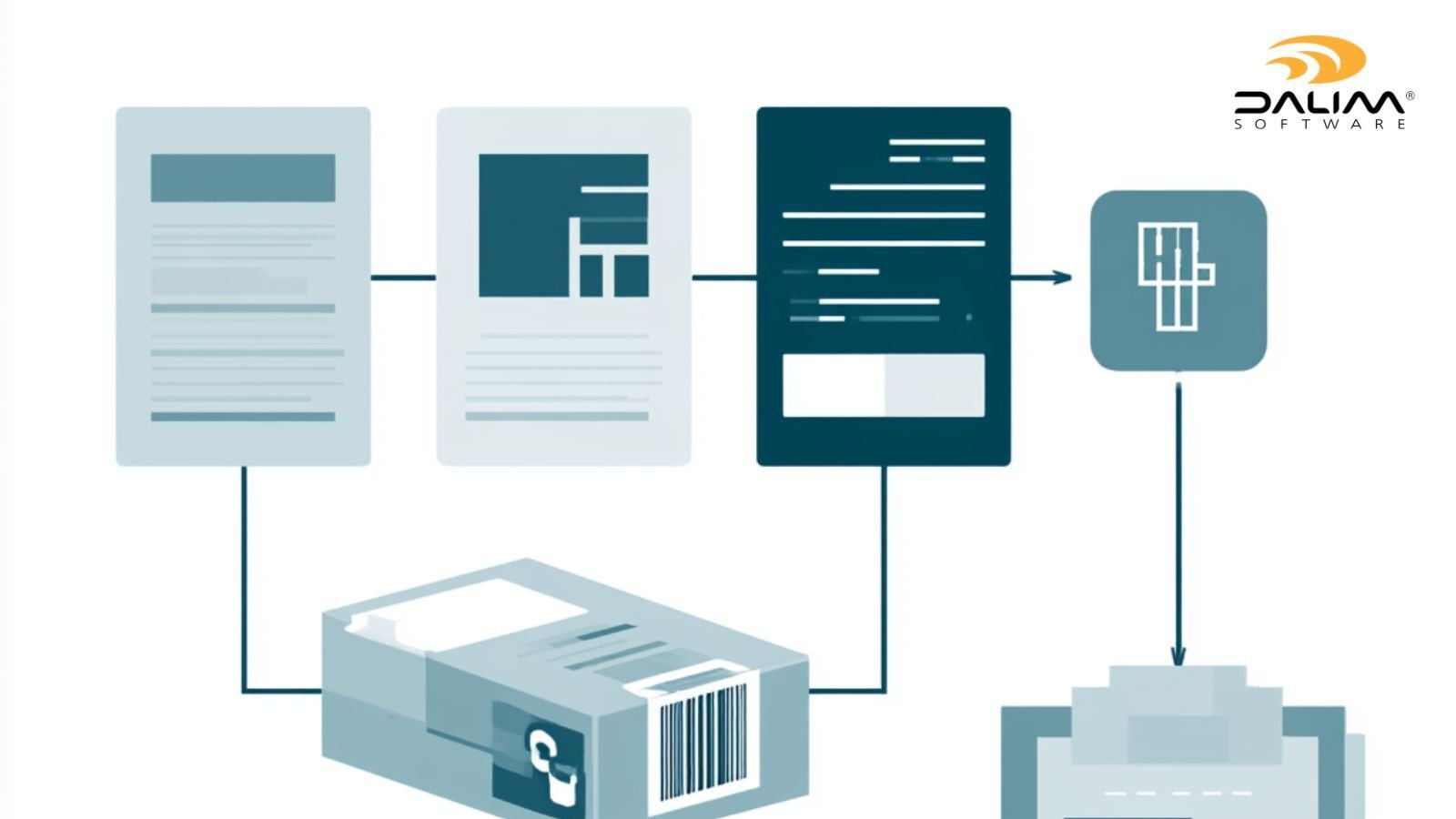
Pharmaceutical packaging artwork approval is the structured process of reviewing, validating, and formally signing off carton, label, and leaflet designs before they go to print. It typically involves creative, regulatory affairs, legal, medical affairs, and quality teams, and it must produce a complete, attributable, and inspection-ready record that the final artwork matches the approved master content in every market and language it ships in.

Why Compliance Gaps Keep Slipping Through

Most packaging artwork errors aren't caused by one bad decision. They're the result of a process with too many disconnected steps and no single source of truth.

Too many stakeholders, too few checkpoints. A single SKU can require sign-off from brand, regulatory affairs, legal, medical affairs, and a local market reviewer, often across different time zones and different levels of technical fluency. When that review happens over email or in shared folders, it's easy for a comment to get lost or a version to move forward without every required signature.

Translation and localization drift. A master carton might ship in fifteen languages across regional variants. If translated copy is dropped into the artwork by hand for each market, small errors compound: a strength that doesn't match the master, a warning statement that got shortened, a variant that was approved for one country but printed for another.

Barcode and serialization accuracy. A barcode that looks correct in a PDF proof can still fail to scan once it's printed, scaled, or placed on a curved surface. Since barcodes carry the product identifier, batch, and expiry data used for verification throughout the supply chain, an unreadable or incorrectly encoded barcode can block distribution entirely, not just look wrong.

Version drift across SKUs. Packaging portfolios often run into the thousands of SKUs once pack sizes, regional variants, and language combinations are factored in. Without a governed master file and clear lifecycle status for every variant, it becomes easy for an outdated version to slip through to production.

Activity logs mistaken for audit trails. Many teams assume that a tool showing "who commented and when" satisfies regulatory documentation requirements. It doesn't. A defensible record needs to show who approved what, on which exact version, in what order, and it needs to be retrievable on demand.

The Regulatory Backdrop Brands Can't Ignore

Packaging artwork sits at the intersection of several regulatory frameworks, and the requirements vary depending on where the product ships.

In the United States, FDA guidance on medication errors related to drug naming, labeling, and packaging sets out how CDER's Division of Medication Error Prevention and Analysis monitors labeling and packaging design specifically to prevent errors that reach patients. The guidance reinforces that container labels and carton labeling need to present critical information, drug name, strength, and dosage, consistently across every panel and every version, since mismatched information between a carton and its container is a recognized source of dispensing errors.

Electronic records and signatures used in the approval process itself typically need to satisfy 21 CFR Part 11 in the US, or the equivalent EU GMP Annex 11 requirements for teams operating in Europe. Both frameworks require that approvals be attributable to a named individual, tied to a specific version of the file, and retrievable as a complete record rather than reconstructed after the fact.

Barcodes printed on the artwork itself need to conform to GS1 healthcare standards, which define how product identifiers, batch numbers, and expiry dates are encoded into GS1 DataMatrix or linear barcodes. Getting this encoding wrong at the artwork stage is one of the more common and costly packaging errors, since it isn't always visible until the barcode is scanned under real production conditions.

None of these frameworks are new, but enforcement activity around them has increased, and the operational reality is the same regardless of market: the artwork approval process has to produce proof, not just a decision.

Manual Approval vs. a Governed Artwork Workflow

  Manual or Fragmented Approval Governed Artwork Workflow
Review record Email threads, shared drives, scattered comments Centralized, timestamped, attributable audit trail
Version control Multiple copies in circulation, unclear which is current Single governed master with locked version history
Translations Manually dropped into each regional file Merged onto a validated master template per language
Barcode checks Visual review only, confirmed after print Scanned and validated for encoding, size, and contrast pre-press
Sign-off Implied by an email reply or a verbal go-ahead Formal e-signature tied to a specific file version
Regulatory readiness Records reconstructed if an inspector asks Complete record retrievable on demand


A Practical Framework: From Brief to Approved

  1. Capture regulatory requirements in the brief itself. Before a single design element is created, the brief should specify which markets, languages, regulatory claims, and mandatory warning statements apply. Retrofitting compliance requirements after the design is drafted is where a lot of rework begins.
  2. Centralize the master artwork and every regional variant. Store the approved master and all in-progress files in one governed digital asset management environment, with clear metadata and lifecycle status, so nobody is working from an outdated local copy.
  3. Build the review chain with mandatory checkpoints. Configure workflow automation so the file cannot progress past legal, regulatory, or medical affairs review until each required approval is logged, with automatic escalation if a reviewer is holding things up.
  4. Validate the technical file before it reaches human reviewers. Automated preflight checks should confirm dieline alignment, trim and bleed accuracy, color consistency, and barcode encoding before the file is treated as review-ready, catching mechanical errors that a visual scan alone will miss.
  5. Manage translations against a single validated master. Route localized copy through a controlled translation cycle that merges approved text onto the master template, rather than letting each market recreate the layout independently.
  6. Capture every decision in an attributable, immutable record. Reviewers should approve against the exact file version they reviewed, with e-signature workflows that satisfy 21 CFR Part 11 or EU GMP Annex 11, producing a record that can be exported and defended during an audit.
  7. Run a final scan-ready check before release. Confirm the barcode scans correctly, the finishes and dieline match the production specification, and every market variant reflects the same approved master content before the file is released to print.

2

Technology and Process Considerations

Getting this right at scale is less about any single tool and more about closing the gaps between stages that used to depend on someone remembering to check. That's true whether artwork is managed in-house by a pharma brand or by a healthcare agency coordinating packaging, labeling, and patient materials across several clients at once. Automated dieline-aware preflight catches structural errors before a human reviewer ever opens the file. Barcode and scan-ready validation confirms encoding, size, and contrast during review rather than after the file has already gone to print. Contextual 2D and 3D proofing lets regulatory and medical reviewers, who aren't always technical, view finished pack renders with finish overlays in place, so approvals reflect what will actually ship.

DALIM FUSION brings these pieces into one governed workspace built around this exact set of pharma requirements: regulatory-first workflows with mandatory compliance gates, barcode and scan-ready validation, contextual 2D and 3D proofing, and immutable, e-signature-backed audit trails. ISDIN, a global pharmaceutical brand, uses the platform to centralize packaging collaboration across departments, partners, and regions, with full traceability supporting faster approvals. For a closer look at what a genuinely compliant audit trail needs to include, see our breakdown of online proofing audit trails for regulated industries.

Key Takeaways for Closing Packaging Artwork Compliance Gaps

  • Most compliance gaps come from disconnected review steps, not careless reviewers, so the fix is a governed process rather than another round of extra checking.
  • Container and carton information needs to match consistently across every panel and every market variant.
  • 21 CFR Part 11 in the US and EU GMP Annex 11 in Europe both require attributable, version-specific, retrievable approval records, not general activity logs.
  • Barcodes need to be validated for encoding, size, and contrast against GS1 standards before print, not confirmed visually after the fact.
  • A single governed master, with translations merged onto a validated template, prevents the version drift that causes mismatched labeling across markets.
  • A repeatable, checkpoint-driven workflow, from brief through final scan-ready validation, closes most of the gaps that a purely manual process misses.

Frequently Asked Questions

What causes most compliance errors in pharmaceutical packaging artwork? Most errors come from disconnected review steps rather than a single mistake. Version drift across markets, translations that aren't merged onto a validated master, and barcodes that aren't scan-tested before print are the most common causes.

What is the difference between an activity log and a compliance audit trail? An activity log shows that actions happened, such as a comment or a file open. A compliance audit trail is attributable to a named individual, tied to a specific file version, and retrievable as a complete record, which is what regulators expect during an inspection.

Does 21 CFR Part 11 apply to packaging artwork approval? Yes, if the approval process uses electronic records and signatures, which most modern proofing platforms do. The regulation requires that those records be attributable, accurate, and retrievable on demand.

How is EU GMP Annex 11 different from 21 CFR Part 11? Both govern electronic records and signatures in regulated environments, but EU GMP Annex 11 applies within the European Union's Good Manufacturing Practice framework, while 21 CFR Part 11 is the US FDA equivalent. Teams operating across both regions typically need a workflow that satisfies both.

Why do barcodes fail even after artwork is approved? A barcode can appear correct in a digital proof but fail once printed, because factors like final print resolution, substrate, scaling, and placement on a curved surface all affect scannability. Validating the barcode's encoding, size, and contrast during review, rather than relying on a visual check, catches this before it reaches production.

How many stakeholders are typically involved in approving pharma packaging artwork? It varies by product and market, but it's common to see brand, creative, legal, regulatory affairs, medical affairs, and a local market reviewer all required to sign off on a single SKU, sometimes across multiple regions and languages.

Can translation errors be caught before printing? Yes, if translated copy is routed through a controlled workflow that merges approved text onto a validated master template rather than being manually recreated for each market. This keeps every language version tied back to the same source content.

What should a pharma brand look for in packaging approval software? Look for dieline-aware preflight, barcode and scan-ready validation, contextual 2D and 3D proofing, e-signature workflows that satisfy 21 CFR Part 11 or EU GMP Annex 11, and a complete, exportable audit trail rather than a basic activity log.

Artwork Approval Compliance in Regulated Industries

1 min read

Artwork Approval Compliance in Regulated Industries

Every regulated brand owner has had this moment: a label goes to print, a regulator or retailer flags an issue, and someone asks, "Who approved this...

Read More
Seasonal Packaging Campaigns: How FMCG Teams Survive Q4

1 min read

Seasonal Packaging Campaigns: How FMCG Teams Survive Q4

Q4 arrives the same way every year. The dates are fixed, the retail windows are non-negotiable, and somewhere between the last summer campaign ...

Read More
Managing Packaging Artwork Approvals Across Markets & Languages

1 min read

Managing Packaging Artwork Approvals Across Markets & Languages

If you've ever watched a single packaging update turn into twelve separate review threads, each stuck waiting on a different regional sign-off, you...

Read More