

1 min read
Packaging Labeling Compliance: FDA & GS1 Rules Guide
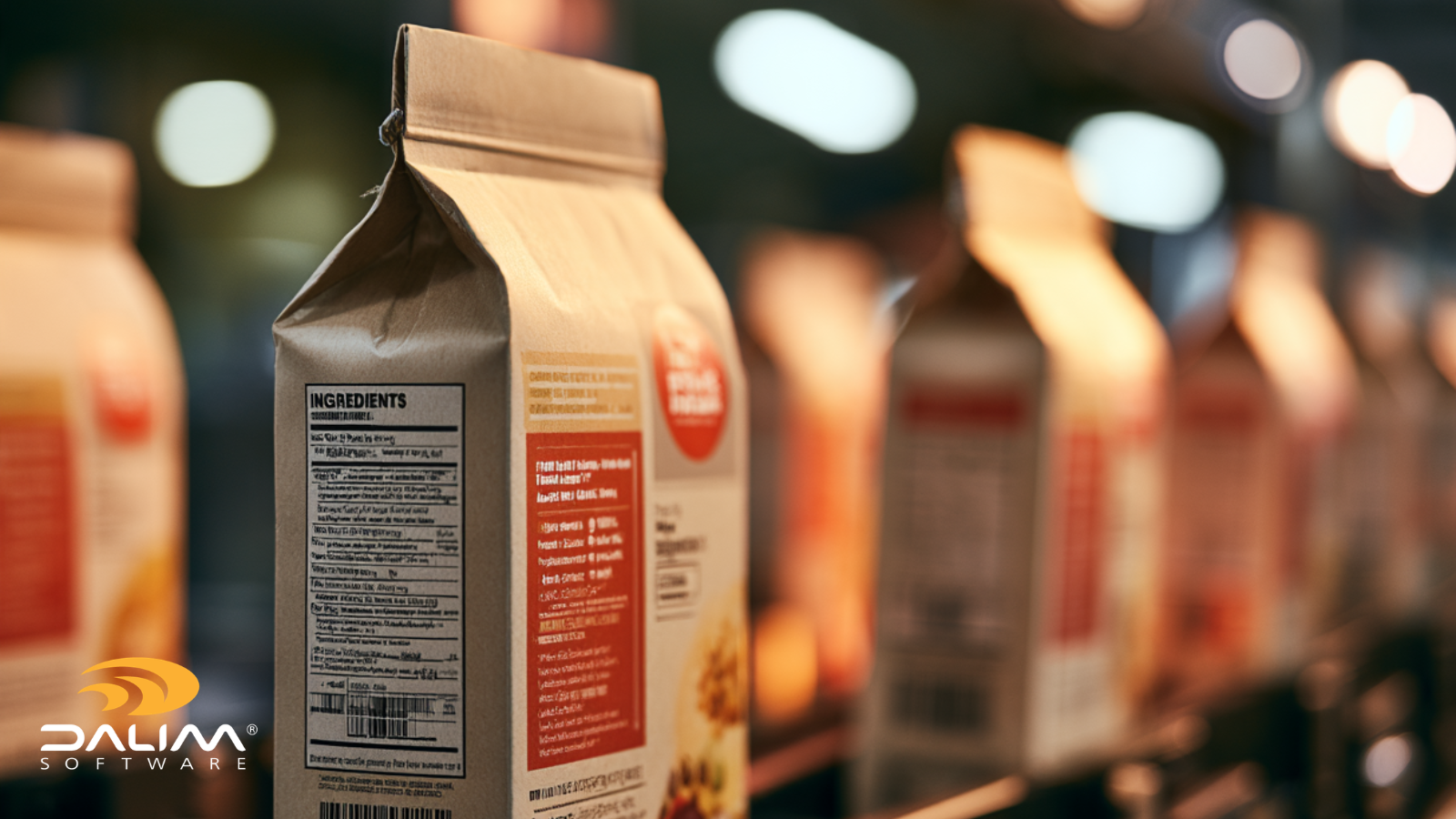
A recalled batch of packaging rarely starts with a design mistake. It usually starts with a regulatory detail that got missed somewhere between the...

8 min read
Rebecca Freeman
:
September 24, 2026
A single ingredient change can ripple across forty SKUs, twelve languages, and a print deadline that was already tight before legal flagged the allergen statement. If you work in packaging, regulatory affairs, or artwork production for a food or beverage brand selling into the EU, that scenario probably sounds familiar. Regulation (EU) No 1169/2011, the Food Information to Consumers Regulation, is the reason.
It is not a new law. It has applied since December 2014, with nutrition labeling following in December 2016. But it is also not a "read it once and forget it" law. Ingredient sourcing changes, allergen formulations shift, and the EU keeps revisiting how nutrition information should appear on the front of pack. Every one of those changes has to land correctly on physical artwork, across every market variant, without slowing down the launch calendar.
Our guide covers what EU 1169 actually requires, where food businesses most often get it wrong, and how to build an artwork process that catches problems before they reach print.
Regulation (EU) No 1169/2011 is the EU-wide law governing what information food businesses must give consumers about the food they sell. It covers prepacked and loose foods, sets mandatory label content including allergens, nutrition, and origin, and applies to every food business operator across the EU at every stage of the food chain, from producers to online sellers.
The regulation consolidated a patchwork of earlier directives into one text, according to the European Commission's food safety guidance. That consolidation is worth knowing, because a lot of legacy label templates in circulation still reflect the older, less specific rules it replaced.
The regulation applies broadly. Per the official EUR-Lex text, it covers food business operators at every stage of the supply chain, wherever they're providing information to consumers. That includes:
Non-prepacked food gets a lighter touch on most particulars, but allergen information is mandatory regardless of format. There is no exemption for "we made it fresh in-store."

Article 9 of the regulation sets out the baseline information every prepacked food label must carry:
Miss one of these, and the fix is rarely a quick label patch. It usually means new artwork, a new proof cycle, and in the worst case a batch that cannot ship until it is corrected.
Annex II of the regulation lists 14 allergens that must be declared whenever they appear as an ingredient or processing aid, even in altered form: cereals containing gluten, crustaceans, eggs, fish, peanuts, soybeans, milk, nuts, celery, mustard, sesame seeds, sulfites above 10ppm, lupin, and mollusks.
This list is stricter than what many markets outside the EU require, so a global brand cannot simply reuse a US or UK allergen box without checking it against Annex II. Sesame and lupin in particular catch teams out, since they are less commonly flagged in other jurisdictions.
The allergen's name has to appear in the ingredient list and be visually distinguished, typically through bold, italics, or a contrasting typeface, so it stands apart from the surrounding text. If there is no ingredient list on pack (common on very small packaging), the label must instead carry the word "contains" followed by the allergen name.
EU 1169 does not just dictate what has to appear on pack. It dictates how visible it has to be. All mandatory particulars must be printed at a minimum font size where the lowercase "x" height is 1.2mm or greater, with a relaxed 0.9mm threshold on very small packs. Text also cannot be hidden, obscured, or crowded out by other design elements.
This is where a lot of "compliant on the master file" labels quietly fail after design revisions. A late change to pack dimensions or a shrink-wrapped panel can push mandatory text below the legal minimum without anyone noticing until a regulator or retailer flags it.
Since December 2016, a nutrition declaration has been mandatory on nearly all prepacked processed food, expressed per 100g or 100ml. At minimum it must state energy value, fat, saturates, carbohydrate, sugars, protein, and salt. If a nutrition or health claim is made anywhere on pack, the underlying nutrient the claim refers to has to be quantified and shown in the same field of vision.
A regulation that trips up more brands than it should is Commission Implementing Regulation (EU) 2018/775, which fleshes out Article 26(3) of EU 1169. If a food's country of origin is stated anywhere on pack (even through a flag, a map, or a phrase like "Made in Italy") and the primary ingredient comes from somewhere else, that ingredient's separate origin has to be declared too.
The classic example: a curry sauce labeled "Made in the UK" where the chicken is imported. The finished product's UK origin claim is legitimate, but the label also needs to say where the chicken came from, because without that detail a shopper could reasonably assume the whole product, ingredients included, is British.
| Common mistake | Better practice |
|---|---|
| Reusing a prior market's allergen box without rechecking Annex II | Validating every ingredient against the current 14-allergen list for each new formulation |
| Treating font size as a design preference | Building the 1.2mm x-height rule into the artwork template itself, not just the design brief |
| Updating ingredient data in the PIM or ERP without a linked check on the artwork | Syncing regulatory and ingredient data with the live artwork so changes surface automatically |
| Declaring origin loosely ("European ingredients") without checking the primary ingredient rule | Confirming the primary ingredient's origin against the finished product's stated origin before approval |
| Relying on one reviewer's memory of the rules | Routing every label through a defined compliance checkpoint before it reaches print |
Food businesses running EU 1169 checks through email threads, shared drives, and a compliance officer's personal checklist tend to hit the same wall: the process scales fine for one market and one SKU, then breaks down at ten markets and two hundred SKUs. Version confusion creeps in. A corrected allergen statement gets approved for the German pack but never makes it to the Polish variant. Nobody notices until a retailer's own compliance team catches it.
A governed, automated workflow addresses this differently. Ingredient, allergen, and nutrition data live in one connected system rather than scattered spreadsheets. Every artwork version carries a full history of who changed what and when. Approval gates are role-based, so a regulatory sign-off cannot be skipped by accident under deadline pressure. The difference is not that automation understands the law better than a person does. It is that it removes the manual handoffs where compliant information quietly falls out of sync with the artwork that actually goes to print.

None of the above requires a specific platform. It does require a system, and most food businesses eventually outgrow spreadsheets and email as that system. This is the problem DALIM FUSION is built around for packaging teams: a platform that centralizes artwork alongside the regulatory and ingredient data it depends on.
In practice, that looks like syncing ingredient, allergen, and SKU data from your PIM or ERP directly with the artwork through DALIM's data integration layer, so a formulation change surfaces against every affected pack rather than staying siloed in a spreadsheet. DALIM's digital asset management keeps every version, along with its approval history, in one governed hub instead of scattered folders. Workflow automation enforces the role-based sign-off gates a regulatory checkpoint needs, and preflight validation catches technical artwork faults, like dieline and layout errors, before a file goes to print. When a regulation changes, the platform's regulatory change management tools can flag which live assets are affected and push updates through a controlled republishing workflow with a full audit trail behind every version.
Food and beverage brands already using DALIM for exactly this kind of packaging accuracy work include Fleury Michon, which centralized its packaging validation workflow to improve accuracy and compliance, and Loacker, which unified its DAM and product data into a single platform integrated with SAP.
It's worth being precise about what this kind of platform does and does not do. DALIM FUSION supports a food business's own compliance program through version control, audit trails, and governed data synchronization. It does not certify that a label is legally compliant with EU 1169. That judgment call still sits with your regulatory and legal teams. What good workflow technology does is make sure the information they've approved is the information that actually reaches print, across every market and every version.
EU 1169 has not stood still, and it likely will not. The European Commission has, at various points, signaled an intention to revisit the regulation and introduce a harmonized, mandatory front-of-pack nutrition label across the bloc, with Nutri-Score the most-discussed candidate. That proposal has repeatedly slipped and remains politically contested among member states, so there's no confirmed timeline for the moment.
For a packaging team, the lesson is less about any single proposal and more about the pattern: EU food labeling requirements change incrementally, often with transition periods measured in months rather than years, and they apply across your entire existing SKU range at once. A separate but related regulation, the Packaging and Packaging Waste Regulation (PPWR), adds its own labeling and material requirements on top of EU 1169's consumer information rules, which is part of why many packaging teams now treat "regulatory change" as an ongoing workflow rather than a one-time project.
If your team is still chasing allergen sign-offs through email threads across a dozen markets, it might be worth seeing how a connected packaging workflow handles it instead.
When did EU 1169 come into effect?
Most provisions applied from December 13, 2014. The mandatory nutrition declaration had an extended deadline of December 13, 2016, for businesses that were not already providing nutrition information.
Does EU 1169 apply to food sold online?
Yes. Distance-selling food has to carry the same mandatory information as the physical label, with the exception of the date of minimum durability, which can be provided at the point of delivery.
What are the 14 allergens under EU 1169?
Cereals containing gluten, crustaceans, eggs, fish, peanuts, soybeans, milk, nuts, celery, mustard, sesame seeds, sulfites above 10ppm, lupin, and mollusks.
Is EU 1169 still in force in the UK?
Yes, in retained form. It carried over into UK law after Brexit and continues to apply in Northern Ireland under the Windsor Framework, though the UK and EU versions have started to diverge slightly since.
Do restaurants and cafes need to comply with EU 1169?
They need to comply with the allergen provisions specifically. Mass caterers must make allergen information available to consumers, even though the full set of mandatory particulars required on a prepacked label does not apply to food served for immediate consumption.
What is the penalty for non-compliant food labeling in the EU?
Enforcement and penalties are set at the member state level rather than harmonized EU-wide, so consequences range from corrective notices and forced relabeling to fines and product withdrawal, depending on the country and severity.
Does adding a nutrition or health claim change my labeling obligations?
Yes. If you make a nutrition or health claim, the nutrient the claim refers to must be quantified and shown in the same field of vision as the claim itself, even if it would not otherwise need separate emphasis.
Is Nutri-Score mandatory under EU 1169?
No. Nutri-Score remains a voluntary front-of-pack scheme adopted by some member states. A mandatory, EU-wide front-of-pack nutrition label has been discussed for several years but has not been adopted.
1 min read
A recalled batch of packaging rarely starts with a design mistake. It usually starts with a regulatory detail that got missed somewhere between the...
1 min read
Let's be honest, the barcode has never been the star of the packaging conversation. It sits quietly at the bottom corner of the pack, does its one...
1 min read
A single mistranslated dosage instruction can do more damage than any packaging error on the market. Get a varnish registration wrong and you reprint...