

7 min read

PPWR Packaging Requirements: What Teams Need to Know

PPWR Packaging Requirements: What Teams Need to Know

Somewhere in your packaging process there's a spreadsheet nobody fully trusts. It holds material specs, supplier declarations and the claims printed on the pack, and it's usually a version or two behind reality. For years that was an annoyance. Under the EU's Packaging and Packaging Waste Regulation (PPWR), it's a risk.

The PPWR has applied since August 12, 2026. If your company places packaging on the EU market, the regulation is relevant to you. That includes brand owners, importers, distributors and non-EU manufacturers, whether or not you have a site in Europe.

The tricky part is timing. Some obligations started in August. Others won't bite until 2028, 2030 or later, and several still depend on technical rules the European Commission hasn't finished writing. That mix makes it easy to either panic or put things off.

Our guide separates what applies now from what's coming, explains what it means for artwork, data and approvals, and gives you a six-step plan to get ready.

What is the PPWR?

The PPWR is Regulation (EU) 2025/40, the European Union's packaging law. It replaces the 1994 Packaging Directive with a single rulebook that applies directly in all 27 member states. It covers packaging design, substances, recyclability, recycled content, reuse, labeling and producer responsibility for anything placed on the EU market.

The shift from directive to regulation matters. A directive had to be written into national law, so rules differed from country to country. A regulation applies as written. You can plan around one set of requirements instead of 27 interpretations, although producer responsibility is still registered country by country.

Who needs to pay attention

  • Brand owners and retailers who put products in packaging on the EU market.
  • Importers and distributors bringing packaged goods into the EU.
  • Packaging manufacturers and converters who make the packaging itself.
  • Non-EU exporters. Location doesn't matter. Placing packaging on the EU market does.
  • Agencies and design studios, because they produce the artwork that carries regulated information.

UK exporters are a good example of a group that can't sit this out. UK government guidance tells businesses to prepare a declaration of conformity for each packaging type and to collect and keep the data the rules require.

What applies now, and what comes next

Think of the PPWR as a staged rollout. Here's how it breaks down.

Already in effect since August 12, 2026

  • Conformity assessment and documentation. Packaging types placed on the EU market need a conformity assessment, supporting technical documentation and an EU declaration of conformity.
  • Substance limits. Heavy metal limits continue, and PFAS limits now apply to food-contact packaging. The Commission's guidance says there's no sell-off period for the PFAS limits. Packaging placed on the market after August 12 must comply even if it was made earlier.
  • Producer responsibility. Producers who place packaging on the market in a member state where they aren't established generally need an authorized representative there.

The Commission also published interpretive guidance and FAQs in 2026. Guidance isn't law, but it shows how regulators read the text. As of this writing, nothing has postponed the application date.

Coming next

  • From August 12, 2028 (or later): harmonized, pictogram-based labels showing material composition, so consumers can sort packaging correctly. The date is 24 months after the relevant implementing acts, whichever is later.
  • From 2030 (or later): recyclability requirements, minimum recycled content for plastic packaging, a maximum empty-space ratio of 50% for grouped, transport and e-commerce packaging, and the first reuse targets.
  • From 2038: the lowest recyclability grade, Grade C, is no longer permitted. Only Grades A and B remain.
  • By 2040: recycled content and reuse targets become more demanding.

For recycled content, the 2030 minimums for plastic packaging range from 10% to 35% depending on the packaging type. By 2040 they rise to between 25% and 65%.

A quick caution. Several dates depend on implementing acts, so they can move. Plan around the earliest date, not the latest.

2

Why the PPWR is really an artwork and data problem

Most PPWR coverage focuses on materials and targets. Those matter. But for a packaging team, the pressure lands in a different place: the pack itself is where every decision becomes visible.

Three things make artwork a regulatory concern.

Labels become controlled content. Material composition pictograms and disposal instructions are on their way. The Commission will set the specifications, including when information is provided digitally, for example through a QR code or another standardized data carrier. Once a symbol is regulated, an error on the label is a compliance error, not a design slip.

Claims need evidence. The PPWR bans labels, marks, symbols or inscriptions likely to mislead consumers about sustainability requirements. A "recyclable" mark on a front panel needs data behind it. If the proof sits in a supplier's inbox, you can't show it.

Change multiplies. One new supplier, one swapped adhesive or one updated rule can touch dozens of SKUs across several markets.

Here's a hypothetical to make that concrete. A food brand changes the lidding film on a range of chilled meals to meet a recyclability goal. The material spec gets updated. But the disposal instructions on the artwork still describe the old film in four markets, and the declaration of conformity references the old specification. Nobody did anything careless. The systems simply didn't talk to each other.

That gap between the decision and the shelf is where most PPWR risk will sit for teams that manage many SKUs.

4

A six-step plan for PPWR readiness

You don't need a perfect system on day one. You need a clear order of work.

  1. Inventory every packaging type. List primary, secondary and transport packaging, including closures, labels, inks, coatings and adhesives. You can't assess what you haven't listed.
  2. Link data to each pack. Gather material composition, weight, recycled content, substance data and supplier declarations for each packaging type. Ask suppliers for documents in a structured format, not scattered PDFs.
  3. Confirm your role. Work out whether you're the manufacturer, importer or distributor for each product, who signs the declaration of conformity, and where you need an authorized representative.
  4. Build the technical file. Create the technical documentation and declaration of conformity for each packaging type. Give every file an owner and a review date.
  5. Audit artwork and claims. Check symbols, disposal instructions and sustainability claims against your data. If you can't evidence a claim, remove it.
  6. Put change control around it. Decide in advance how a spec or rule change finds the affected artwork, who approves the update and where the record is kept.

Steps 1 to 4 build the evidence. Steps 5 and 6 keep it true over time, and step 6 is the one most teams skip.

Manual vs connected workflows

The same task looks very different depending on how your process is set up.

  • Finding affected artwork. Manual: searching shared drives and asking colleagues which packs use a given material. Connected: searching assets by metadata and seeing exactly which files are affected.
  • Updating labels across markets. Manual: briefing each market by email and chasing replies. Connected: pushing the change through one controlled workflow with clear owners.
  • Approving changes. Manual: comments scattered across PDFs and message threads. Connected: reviewers mark up the same proof, and sign-off is recorded.
  • Proving what was approved. Manual: reconstructing the story from inboxes. Connected: reading the version history and audit log.

3

Common mistakes vs best practice

  • Mistake: Waiting until 2030 because most targets land then. Better: Start with the obligations already in force, then work forward.
  • Mistake: Treating the PPWR as a sustainability team project. Better: Involve packaging, regulatory, procurement, artwork and marketing from the start.
  • Mistake: Keeping evidence in email. Better: Hold supplier data and approvals in a controlled system with owners and dates.
  • Mistake: Adding recyclability claims or symbols early to look prepared. Better: Publish only what you can substantiate today.
  • Mistake: Forgetting agencies and suppliers. Better: Include them in the same approval workflow, with defined roles.
  • Mistake: Assuming old stock is always safe. Better: Check each requirement against its own date. The PFAS limits have no sell-off period.

How workflow technology helps, and where it doesn't

Software won't decide your recyclability grade or write your declaration of conformity. Your material specialists and regulatory team do that. Technology helps with the part between the decision and the shelf: getting the right artwork approved, correct and traceable.

That's the area DALIM FUSION is built for. On our packaging workflows page, DALIM has several capabilities that line up with the PPWR challenges above:

  • A controlled source of truth. A work-in-progress digital asset management layer stores masters and working files with structured metadata, permissions and lifecycle states, so teams and suppliers use the correct artwork.
  • Regulatory change management. DALIM detects assets affected by new regulations such as the PPWR, pushing updates through controlled workflows and republishing artwork across markets with a full audit trail.
  • Automated artwork checks. Preflight and file checking validates items such as dielines, barcodes, varnish and foil zones, and color profiles before files move on.
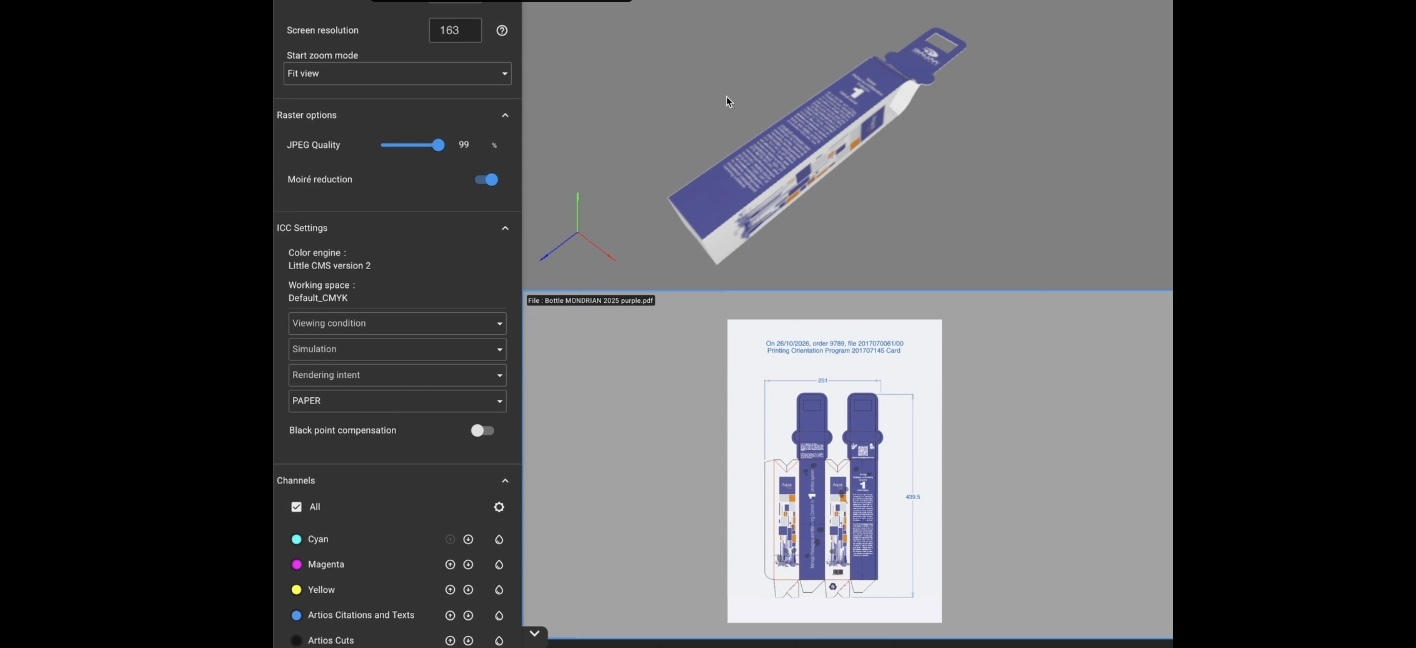
  • Packaging proofing. Online proofing supports rotating 3D views, layer toggles and version comparison, which helps when a pictogram changes size or position.
  • Data alignment. PIM and ETL synchronization keeps regulatory text, ingredients and SKU data matched to the artwork, and connectors and APIs link it to the rest of your stack.
  • Governance and records. Role-based tasks, sign-off gates, audit logs and version histories give you the paper trail an authority, retailer or internal auditor may ask for.

The framing is worth stating plainly. A platform like this supports your own compliance obligations. It doesn't certify that a pack complies. The people who own the data still own the decisions.

For a real-world view of packaging traceability and approvals at scale, our ISDIN case study is a useful read.

Automation opportunities are worth sorting by effort. Quick wins include automated checks for barcodes and dielines, and metadata-driven search for affected files. Bigger projects include connecting your PIM so regulated text flows into artwork, and building workflows for regulatory change requests.

Frequently asked questions

When does the PPWR apply?

The PPWR applies from August 12, 2026. It entered into force on February 11, 2025, and many of its requirements, such as labeling, recyclability and recycled content, apply in stages from 2028 to 2040.

Does the PPWR apply to companies outside the EU?

Yes, if they place packaging on the EU market. The regulation covers manufacturers, importers, distributors and retailers, so a non-EU brand selling packaged goods into the EU is in scope.

What is a declaration of conformity under the PPWR?

It's a document in which the responsible manufacturer states that a packaging type meets the regulation's requirements. It has to be backed by technical documentation, and you need one for each packaging type placed on the EU market.

Has the PPWR been delayed?

As of this writing, no act has postponed the August 12, 2026 application date. Some secondary legislation, including detailed labeling specifications, is still being developed. That affects when later requirements apply, not whether the regulation itself does.

How does the PPWR affect packaging artwork?

Artwork has to carry accurate, evidenced information. That means correct material and disposal labeling when the harmonized rules arrive, no misleading sustainability claims, and a clear record of which version was approved and why. Changes to specs or rules must reach every affected file.

What are the PPWR recyclability requirements?

From 2030 (or later, depending on implementing acts), packaging must be recyclable and is graded A, B or C. From 2038, Grade C is no longer allowed. Producer responsibility fees are also expected to vary with these grades.

Is there a sell-off period for existing stock?

Packaging already placed on the market before a requirement applies can generally continue to be made available. But the Commission's guidance says the PFAS limits for food-contact packaging have no sell-off period. Check each requirement against its own date.

Key takeaways

  • The PPWR (Regulation (EU) 2025/40) has applied since August 12, 2026, and covers anyone placing packaging on the EU market, inside or outside the EU.
  • Conformity assessment, technical documentation, the declaration of conformity and PFAS limits are already live. Labels, recyclability, recycled content and empty-space rules follow from 2028 onward.
  • Dates tied to implementing acts can move, so plan around the earliest date.
  • For packaging teams, the PPWR is as much an artwork and data problem as a materials problem. The pack is where evidence meets the shelf.
  • Start with an inventory, link data to each pack, build the technical file, audit your claims and put change control in place.
  • Workflow technology supports compliance by keeping artwork, data and approvals aligned. It doesn't replace the experts who own the decisions.

The PPWR is a long rollout, and the teams that cope best will be the ones that treat it as an ongoing process rather than a single deadline. If you'd like to see what a controlled, auditable artwork approval process looks like, our DALIM packaging page is a good place to start!

Pharmaceutical Packaging Artwork: Closing Compliance Gaps

Pharmaceutical Packaging Artwork: Closing Compliance Gaps

See how pharma teams take packaging artwork from brief to approved with fewer compliance gaps, covering barcodes, translations, and audit trails.

Read More
The Scaling Problem in Packaging: What Goes Wrong and How to Solve It

The Scaling Problem in Packaging: What Goes Wrong and How to Solve It

Packaging teams that scale fast often hit the same wall: slow approvals, version errors, compliance gaps. Here's what breaks, and how to fix it.

Read More
Reviewing 3D Packaging Assets: Where Standard Markup Fails

Reviewing 3D Packaging Assets: Where Standard Markup Fails

Standard markup tools were built for flat files. Discover why rotating 3D packaging assets demand a different approach to review and annotation.

Read More